Pump Calculator
Build attack lines, standpipes, wyes, master streams, foam lines, and FDC setups.
Fast, practical tools for pump operators, instructors, and students. Calculate pump pressure, train your crew, print pump cards, and make the numbers second nature.
New visitors can now jump directly to the calculator, dashboard, drill-night material, printables, or hand-method training.
Pick a path based on what you are trying to do: calculate, teach, train, print, or troubleshoot.
Open guide →One screen for pump pressure, water supply, tank duration, troubleshooting, foam, drafting, and checkoff tools.
Open dashboard →Ready-to-run pump operator drills with objectives, setup, student tasks, answers, and common mistakes.
Open drills →Plain-language fire engineer guides for hose/nozzles, apparatus checks, standpipes, sprinklers, fire pump rooms, ITM awareness, safety, and 1410-style drills.
Open library →Company evolution drill sheets for attack lines, water supply, FDC, master streams, relay supply, and evaluator checkoffs.
Open drill library →Hand-method sheets, scenario worksheets, pump cards, friction loss practice, and instructor review material.
Open printables →Tool-board style cards make the page feel like a working engineer console instead of a generic app landing page.
Build attack lines, standpipes, wyes, master streams, and more. Get PDP fast.
Open tool →Pump troubleshooting, water supply decisions, drafting, foam eductor setup, checkoffs, and preconnect verification.
Open hub →Work through pressure drops, cavitation, intake problems, foam issues, and no-water conditions.
Open tool →Compare fire flow need against hydrant, relay, tender shuttle, and tank-water supply.
Open tool →Calculate eductor inlet pressure setup, hose before the eductor, and foam concentrate use.
Open tool →Find friction loss for hose size, hose length, and GPM using common pump formulas.
Open tool →Calculate available hydrant flow using static, residual, and flowing pressure.
Open tool →Design relay setups, estimate LDH loss, and work through engine spacing.
Open tool →Calculate nozzle reaction at the tip and help firefighters understand handling force.
Open tool →Create and print pump cards for apparatus, preconnects, charts, and department notes.
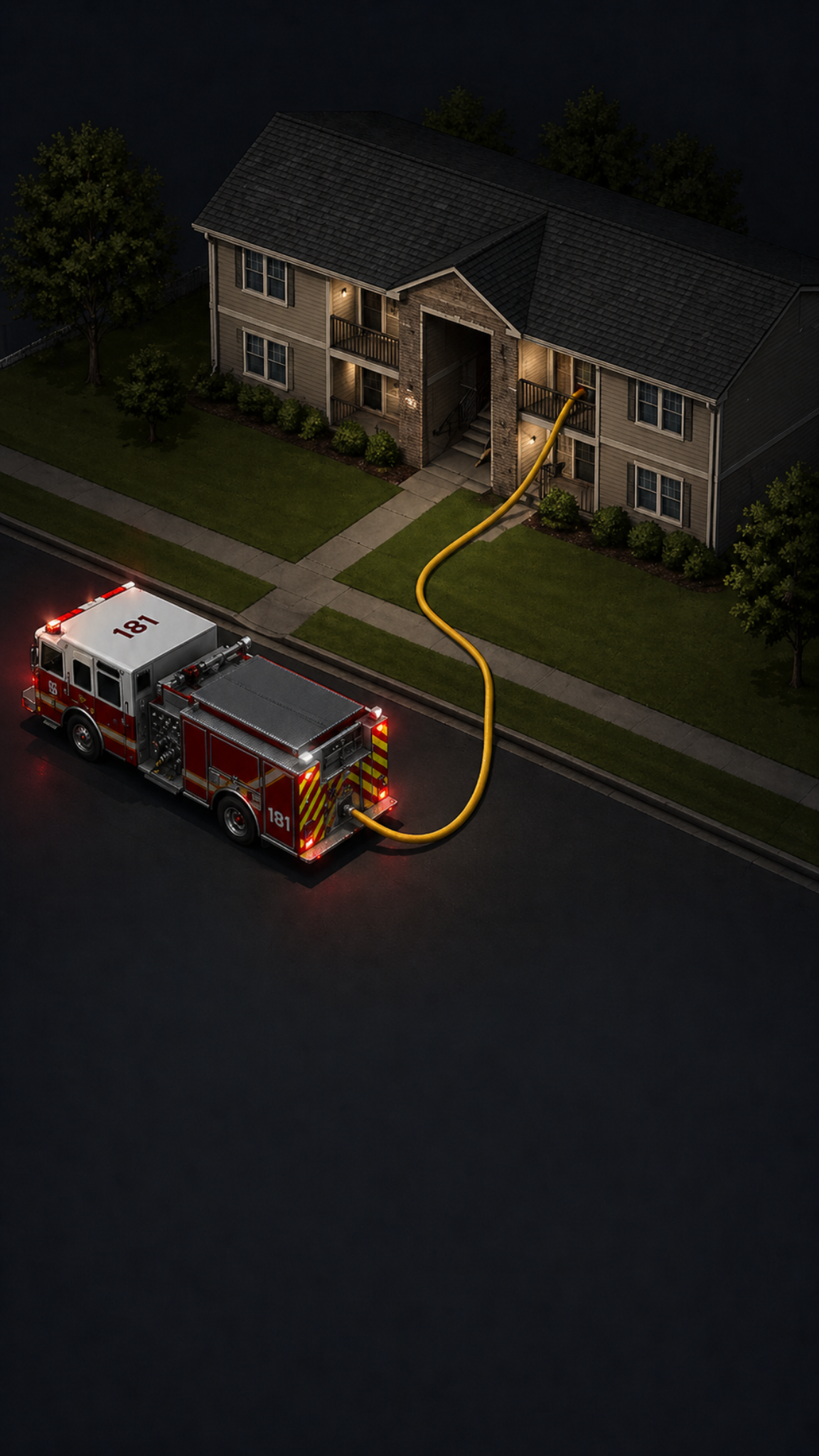
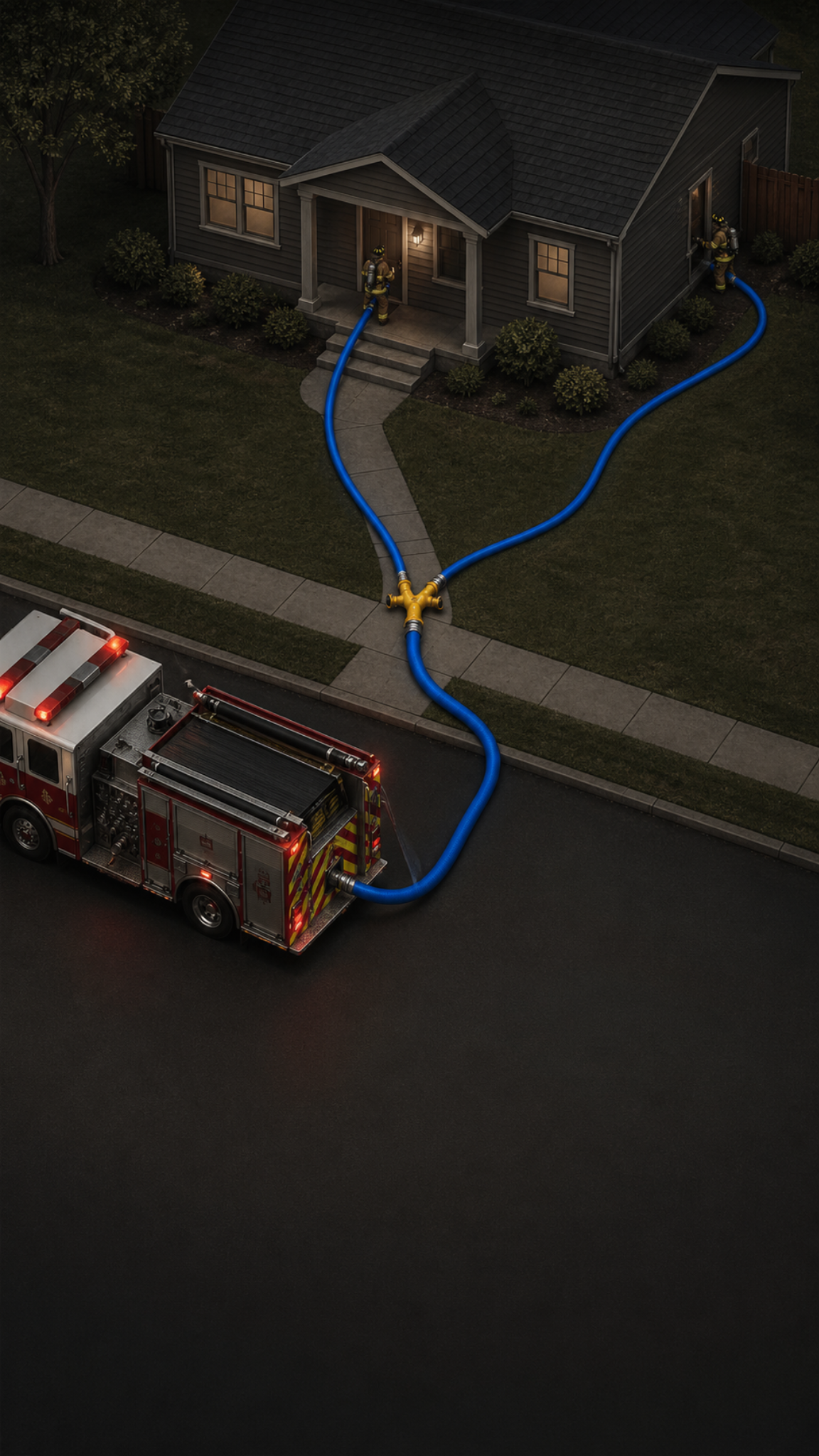
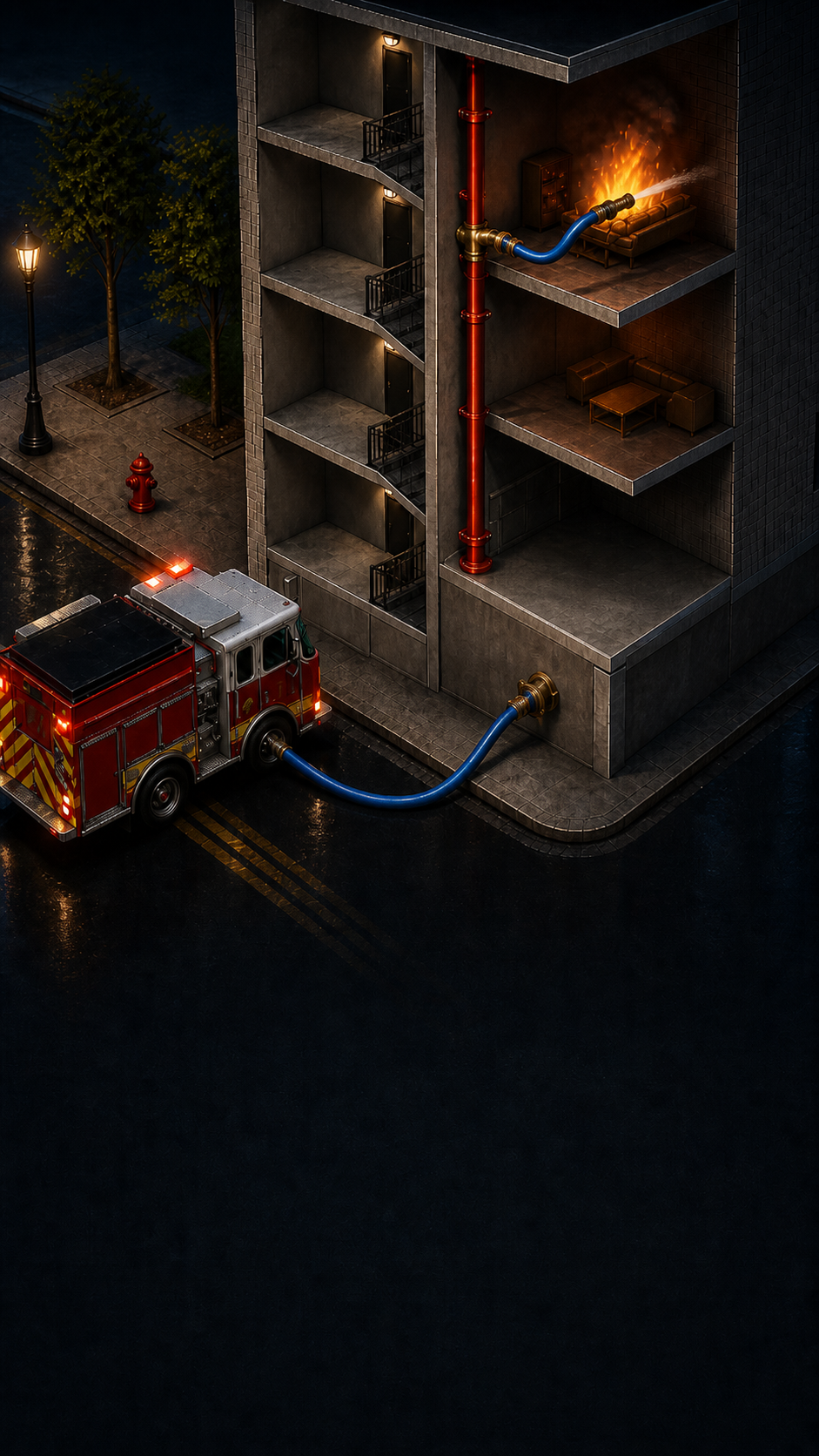
Open tool →Visual scenarios help students connect the image, hose layout, nozzle choice, and pump math.
Realistic pump operator scenarios with multiple difficulty levels.
Pump cards, reference charts, worksheets, and answer keys.
Ready-to-teach material with answers and instructor notes.
Driver/operator, academy, company training, and promotional prep.
Each version is designed for its platform, but the mission stays the same: fast pump math, practical fireground tools, department setup, pump cards, and driver/operator training support.
Use FireOps Calc on the platform that fits your workflow. The web and Android versions are built for fast calculator access and field-style tools. The Apple version uses a polished Engineer Console layout. All versions support the same core fire-service workflow: calculate, set up your department, build pump cards, and train with practical pump problems.
Build attack lines, standpipes, wyes, master streams, foam lines, and FDC setups.
Use friction loss, hydrant flow, relay pumping, nozzle reaction, and water supply calculators.
Save common hose, nozzle, and apparatus presets so calculations match your department.
Build printable reference cards for preconnects, friction loss, smooth bore charts, and department notes.
FireOps Calc is the field-use pump math and engineer reference app. FirePumpSim is the training app for visual scenarios, drill practice, and driver/operator skill development.
The tools use common training formulas. Always follow department SOPs, apparatus pump charts, manufacturer data, and instructor direction.
The website includes free public tools, references, and training resources.
The mobile apps are designed for phone use. Some web features may require a connection.
Use FireOps Calc for training and quick reference. Always follow your department SOPs, pump chart, manufacturer data, and instructor direction.
Learn more